Sleeping Well
Your child on CPAP Therapy
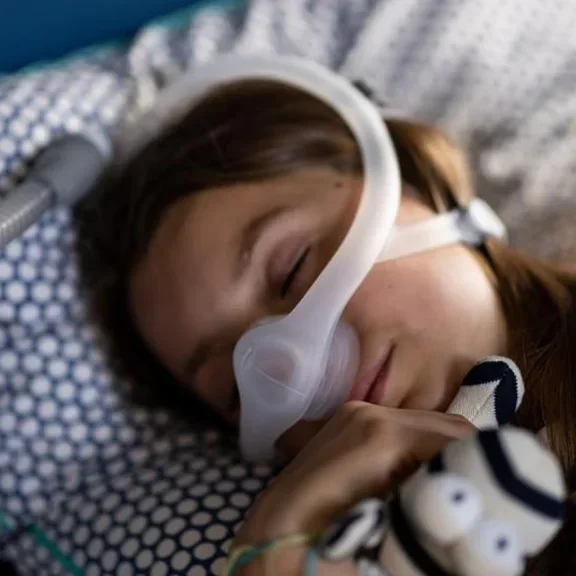
Sleep Hygiene in Children and Adolescents
Healthy Sleep Habits & Sleep Hygiene in Children and Adolescents
Helping your child to get a good night’s sleep is probably one of the most important things you can do for them because achieving good quality sleep will not only improve your child’s physical health, but also their educational, social and emotional well-being.
Set a Consistent Night Time Routine
- Maintain routines: Keep regular bedtimes and wake-up times every day, even on weekends.
- Same times daily: Ensure your son/daughter goes to bed at a reasonable bedtime for their age and wake them up/set an alarm at the same time every day, even on weekends.
- Weekend flexibility: Keep weekend wake times within two hours of weekday routines.
- Avoid long naps: Limit or drop daytime naps for older toddlers and young children so they are tired for bedtime.
Optimize the Bedroom Environment
- Cool and dark: Keep the bedroom cool (around 65°F to 68°F / 18°C to 20°C) and dark, using a small nightlight only if your child fears the dark.
- Quiet space: Block street noise with a fan or a white noise machine, relaxing music.
- Bed association: Reserve the bed strictly for sleeping, not for playing, homework, or watching television.
Manage Diet and Activity
- Daily exercise: Encourage active movement, daytime play and sports, but avoid strenuous workouts right before bed.
- No caffeine: Avoid soda, chocolate, tea, and energy drinks from midday onward.
- Smart snacks: Prevent heavy meals right before sleep, but offer a light carbohydrate snack (like toast or cereal) if your child/adolescent is genuinely hungry.
- Screen curfew: Turn off phones, tablets, and TVs at least 30 to 60 minutes before bedtime to prevent blue light from blocking melatonin. More guidance is available from the Sleep Foundation.
Other things we can do to help with Bedtime routine:
🏆 4. Positive Reinforcement
Children respond incredibly well to praise, structure and recognition:
- Sticker charts for younger children: Keep a visual progress chart on the wall. Award stickers for small milestones, such as keeping the mask on for the daytime practice session or completing a full night.
- Offer Small incentives: Use small rewards for completed milestones, like picking out the next bedtime story, picking a suitable fun activity or earning an extra 15 minutes of playtime.
- For older children > 16 yrs: Allow them to view their progress and educational materials on the APP.