Motivating your child
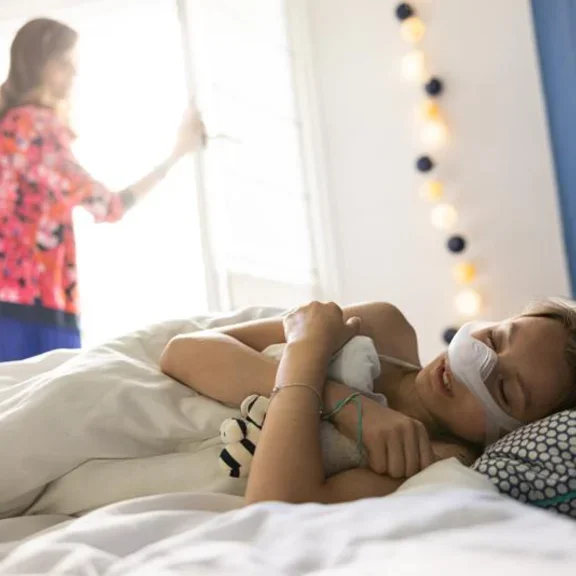
Motivation and Tips to help keep the routine use of your CPAP Therapy
What every parent needs to know to help their child use their prescribed CPAP Treatment
When CPAP therapy is prescribed for your son/daughter there is no doubt that it's going to require effort not only from the child/young person but from you, their parents and the surrounding family. Treatment is a positive thing for your child’s health and should help your son or daughter feel better when they are using their equipment every night. However, each child/young person is different and knowing what might help is half the battle in motivating your child to make therapy work. Hopefully some of the tips below might help in this process.
It is most important to keep the goal of improving your child’s breathing during sleep in mind when you feel frustrated during the process or when your child pushes back. It is important to remain calm, reassuring and positive about the benefits it will offer. Offer praise even for small improvements. Try not to focus on the negatives.
Let older children have a say and pick their own mask based on what appeals to them as they may be more inclined to use therapy. If it's not working out, contact our Sleep 360 Team and we will be able to help.
🧸 Strategies for Younger Children (Ages 2–11)
For younger children, the goal is to remove the "scary" stigma and noise of the device and turn it into a normal, rewarding part of their nighttime routine.
- Normalize through play: Put a spare mask on a favorite stuffed toy or doll. Let them touch the equipment, feel the air on their hands, face and hair, and give the CPAP machine a fun name.
- Use the "Desensitization" method: Do not expect them to sleep with it right away. If they do that's an amazing start but in most cases, start during the day. Have them hold the unattached mask to their face for 2 minutes while watching a favorite cartoon. Gradually move to wearing it attached to the machine for 5, 10, and eventually 30 minutes during daytime activities before trying it at night.
- Decorate the machine: Let them personalize the plastic outer shell of the CPAP machine with stickers (just ensure no stickers block the air vents or go onto the mask itself).
- Motivation: Use visual sticker charts/Reward posters. Give a sticker immediately after successful daytime practice or a night of wearing the mask. Trade a week of stickers for small, meaningful rewards.
📱 Strategies for Teenagers (Ages 12–18)
Teens value autonomy and independence and are highly sensitive to what people think, their peers' perception and physical discomfort. Forcing compliance will often backfire. Instead, focus on working together and building time on therapy and encouragement.
- Focus on real-world benefits: Focus CPAP therapy around what they care about. Explain how better sleep translates directly to more energy for sports and the things they enjoy, clearer skin, better moods and improved focus to get through school.
- Give them choice and control: Let them lead the process. Allow them to choose their own mask style. Teens often prefer low-profile options like nasal pillows or minimal contact masks and headgear.
- Build daytime comfort privately: Just like younger kids, teens need to adjust to the therapy. Encourage them to wear the mask while scrolling on their phone, reading, or playing video games in their room so they adjust without feeling self-conscious. Get them to show the family and explain how it all works.
- Leverage tracking apps: Many modern CPAP machines connect to smartphone apps. Older adolescents > 16 years often find it motivating to track their own "sleep score" and see their apnea events drop in real-time.
Mask advice and Selection
Practice with the mask when your child is in a good mood, watching TV, playing video games, playing with toys etc. Use toys and play for younger children eg. placing a mask on a favourite teddy or doll.
Practice every day or at appropriate times when they are relaxed. It may take a while for your child to get used to the mask but work with them and you will get there.
Get them to get involved in fitting, removing and cleaning their mask and tubing etc and setting their machine up where age appropriate.
Decorate the outer casing of the machine with stickers or even give the PAP machine a name. Ask the parent to engage in play and popping the mask over their nose or have parents wear silly noses.
Have the CPAP machine running in the background while you practice so they can get used to the noise. Often this can be very relaxing. Show them the air and let them feel it so they are not scared and to understand how it all works.
Tips for mask application on younger children
Approach your child from the front where they can see you and never from the back.
Tell your child that you will place the mask on his/her face and that it will tickle a bit initially and lift it off again.
Make eye contact with your child and continue talking to him/her.
Slowly place the mask on the child's face with no air attached and keep it there initially for just 5-10 seconds while providing lots of positive encouragement. Remind your child to breathe in and out. Using masks that are brightly coloured or animal themed can also help with acceptance.Gradually increase time to 1 minute.
Once your child can have the mask on his/her face for 1 minute, put the mask on the child’s face and pull headgear slowly over head to secure the mask without you having to hold it. This should be done with the mask not attached to the tubing and machine and with the air flow off.
If your child resists or refuses, you might have to gently redirect her/his hands and place the mask on while calmly talking to your child and release hands once she/he calms down.
Adding a rewarding activity, i.e. reading favorite book, favorite TV show or movie once your child keeps the mask on can help.
You may have to repeat these steps many times as your child learns to be comfortable with the mask. This part can take time.
Once your child can keep the mask on for a minute or two for a few days in a row, connect to the machine and repeat the process. Once your child tolerates the mask while connected to the machine, it is time to start putting it on at bedtime.
It might take 2-4 weeks for this process. Remember to remain calm. Give praise for progress. Try to end each session with a success, even a small one. CPAP should be part of a good bedtime routine involving:
Consistency each night
A relatively cool, quiet, almost dark room
Getting your CPAP machine ready to use at night and putting the mask on should be part of this nightly routine just like other bedtime activities such as putting on pj’s, brushing teeth, reading a book or singing a song
How to ensure continued therapy
Wear the mask every night. Avoid taking “night’s off/holiday’s” from CPAP, including during family or Holiday visits.
Put the CPAP on during your bedtime routine.
Continue to praise your child for wearing the mask.
Keep a sticker chart to record your child’s progress with prizes every 1-2 weeks. The prizes can be a special outing with parents or the child picking a movie for family night, not necessarily things to buy your child.
Have the mask reviewed if the child is growing quickly or has outgrown the cushion size or headgear. Sometimes you may need to trial a few mask options to get the right one. Your clinician will decide if they wish for a mask type change.
If the head gear seems to be getting stretched out or not fitting, contact us for help.
With consistent use, your child will be more rested so you and your child will notice benefits to the use of CPAP.
CPAP Tips for Kids is an informational video that encourages children to get comfortable using a CPAP machine. The interactive step-by-step instructions highlight ways children can adapt to the machine and learn how to get a good night's sleep while wearing a CPAP